
- Published: 15 July 2024
- Author: Rebecca Olschner- Wood
Despite a growing number of countries worldwide joining the abolitionist movement every year, bringing the prospect of universal abolition closer to reality, the death penalty remains a significant human rights concern. In 2023 alone, Amnesty International recorded 1,153 executions (excluding China, North Korea and Vietnam, due to unavailable data), marking a 31% increase from the previous year and the highest number since 2015. These executions were carried out by only 16 countries, the fewest on record according to Amnesty International.
Not only is the death penalty a violation of the fundamental right to life, but too often, these executions are related to offences that do not meet the threshold of the “most serious crimes,” according to international human rights law and standards. They also disproportionately affect the most vulnerable communities, including ethnic minorities, people living in poverty, individuals with mental disabilities, as well as the LGBTQI+ community. Furthermore, and despite the increasing isolation of retentionist countries, the abolitionist movement is deeply concerned about threats of potential resumption of executions in countries currently applying moratoriums.
Until all countries abolish the death penalty, human rights of individuals, particularly those marginalized, will be threatened.
More than ever, civil society needs to join forces and speak with one voice to clearly express that the struggle against the death penalty is a fight for human rights. Debates need to occur in public spaces, and awareness must be raised about the cruelty of this practice. We all have a role to play in this fight, because capital punishment is not, and will never be, a form of justice; it is an act of revenge.
Joined by this conviction, 25 abolitionist organizations, including regional networks, grassroots organizations and international NGOs have come together to form the Global Consortium for Death Penalty Abolition. Funded by the European Union and led by the World Coalition Against the Death Penalty, this civil society-led initiative aims to amplify the voice and influence of the abolitionist movement on a global scale. It has two main objectives:
- To increase the influence of the abolitionist movement in relevant decision-making processes and decision-making spaces.
- To expand and create a more diverse abolitionist ecosystem at the global, regional and national level.
By coordinating efforts, strengthening collaboration, providing financial support, and sharing best practices, the Consortium aims to empower civil society organizations to more effectively advocate for abolition and support stakeholders’ action at the national, regional and international levels.
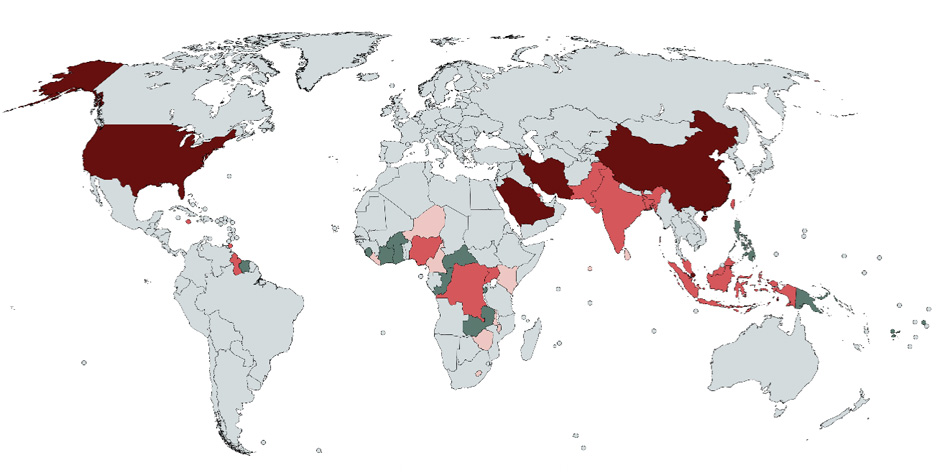
The Consortium will operate in 40 target countries, divided in four categories and strategies:
- Promoting transparency in hardcore retentionist countries;
- Reducing the scope in retentionist countries with a possibility for change;
- Achieving abolition in law in countries that are abolitionist in practice; and
- Encouraging the ratification of abolitionist treaties in abolitionist countries in law.
The Global Consortium for Death Penalty Abolition represents a unified response to ensure that every person, regardless of their circumstances, is free from the threat of capital punishment.
The Global Consortium for Death Penalty Abolition is led by the World Coalition Against the Death Penalty, together with twelve members including 4 co-leads, and the support of twelve affiliate members.
- Anti-Death Penalty Asia Network (ADPAN)
- Comunità di Sant’Egidio
- Ensemble contre la peine de mort (ECPM)
- Greater Caribbean for Life (GCL)
- Harm Reduction International (HRI)
- International Federation of ACATs (FIACAT)
- Parliamentarians for Global Action (PGA)
- Penal Reform International (PRI)
- Reprieve
- The Death Penalty Project (DPP)
- The Rights Practice (TRP)
- Witness to Innocence (WTI)
- Bahrain Institute for Human Rights and Democracy (BIRD)
- Culture pour la Paix et la Justice (CPJ)
- Droits et Paix
- European Saudi Organization for Human Rights (ESOHR)
- Foundation for Human Rights Initiative (FHRI)
- The Kenyan Section of the International Commission of Jurists (ICJ Kenya)
- Iran Human Rights (IHRNGO)
- The Commission for the disappeared and victims of violence (KontraS)
- Lembaga Bantuan Hukum Masyarakat (LBHM)
- Taiwan Alliance to End the Death Penalty (TAEDP)
- The Advocates for Human Rights (TAHR)