
For more than eight years, British citizen Masud* lived under sentence of death in Bangladesh. That is more than 3,000 days, or 72,000 hours, spent facing the possibility of execution whilst navigating an unfamiliar criminal justice system.
It took eight years to unpick the miscarriage of justice that had put him on death row.
The case against Masud
Masud was convicted in connection with the attempted importation of 8.45kg of heroin, discovered in four parcels sent from Pakistan to Bangladesh in 2014. Yet no drugs were ever found in his possession, and no witness claimed direct knowledge of his involvement.
The case against him was entirely circumstantial and relied heavily on a confession made by his co-accused and family member, Rahim*. The confession was obtained after Rahim had spent seven days in police remand, and he later sought to retract it.
There were significant questions about its reliability. It referred to “ganja”, rather than heroin, which carries a significantly lighter sentence. Rahim’s account of how Masud became connected to the parcels was inconsistent with other evidence before the court. There was also no independent evidence corroborating the confession, without which it could not legally form the basis for Masud’s conviction.
The prosecution argued that the fact Rahim had disappeared after obtaining bail demonstrated a “guilty mind” and supported the reliability of his confession. But his disappearance did not provide direct proof of Masud’s involvement in the alleged offence.
This was not the only flaw in the case against Masud. The prosecution said telephone records linked him to the attempted importation, but those records were never produced before the trial court. Postal employees who referred to Masud in their testimony acknowledged under cross-examination that their knowledge of him had come from the police. Witnesses also revealed that investigators had not contacted any of the four individuals to whom the parcels were addressed.
Yet, in June 2018, Masud was sentenced to death.
The trial court’s reasoning was brief. The judgment emphasised the quantity of heroin that had been recovered and concluded that the accused were members of an international drug trafficking network. But it contained little reasoning as to why he should receive the death penalty, rather than an alternative sentence.
In a case where the punishment is death, there can be no room for doubt about the reliability of the evidence or the fairness of the process. In Masud’s case, weaknesses in the evidence were compounded by this limited consideration of why he should receive the ultimate punishment. This raised serious questions as to whether he had received a fair trial and whether the death sentence imposed upon him was arbitrary.
Eight years correcting a miscarriage of justice
The Death Penalty Project began providing assistance to Masud after his conviction in 2018.
Alongside his local legal team, we worked over the following eight years to identify and unpick the problems in his case, provide expert advice and help determine the legal route towards overturning his conviction and securing his release.
Progress was exceptionally slow.
Masud’s appeal against his conviction was not listed before the High Court until early 2025 – a staggering seven years after he had originally been sentenced to death. But, because the composition of the court’s bench of judges changed twice in that year, his case had to be relisted and reargued on two further occasions.
In August 2026, after Masud’s appeal had been heard by the High Court for a third time, his conviction and sentence were overturned and he was released. He has since returned to the UK.
The wider picture in Bangladesh
Masud’s experience of the criminal justice system in Bangladesh is not an isolated one.
More than 2,600 people are currently living under sentence of death in the country and hundreds of new death sentences continue to be imposed each year. The criminal justice system is overwhelmed. There are more than a thousand capital cases pending in the High Court, which can only process 50–100 cases each year. An appeal against a death sentence takes eight years on average to be heard.
Wrongful convictions are inevitable in a system marred by torture, coerced confessions, under resourced forensic capacity, ineffective legal representation, unconscionable delays and arbitrary sentencing. Research from the University of Dhaka has also shown that the death penalty disproportionately affects individuals who are poor and marginalised.

In 2026, research published by The Death Penalty Project and conducted by the Centre for Advanced Legal Studies at the University of Dhaka dug deeper into one part of the system: the quality of legal representation in capital cases. The findings revealed that the quality of legal representation routinely falls short of the standards required in a capital case. People who cannot afford private lawyers are disproportionately experiencing violations of their right to a fair trial.
The research identified an acute shortage of suitably experienced lawyers, particularly at trial stage; inadequate remuneration for state-funded lawyers; poor communication between lawyers and their clients; and serious delays in appointing legal representation. In almost all the cases examined involving state defence lawyers, the lawyer was appointed only during the hearing stage.
READ MORE ABOUT THE RESEARCH HERETaken together, these problems expose a criminal justice system in which mistakes are inevitable. Systemic issues are weakening the effectiveness of safeguards, and the process of correcting errors can take years.
Even with the assistance of senior counsel in Bangladesh and pro bono assistance form The Death Penalty Project, it took eight years to resolve Masud’s case. Many others on death row will not have access to the resources and assistance that he did. Many errors will not be fixed.
Criminal justice systems are capable of getting things wrong. The stakes cannot be life or death.
*Masud and Rahim are pseudonyms used to protect their identities.
More stories of wrongful convictions in Bangladesh
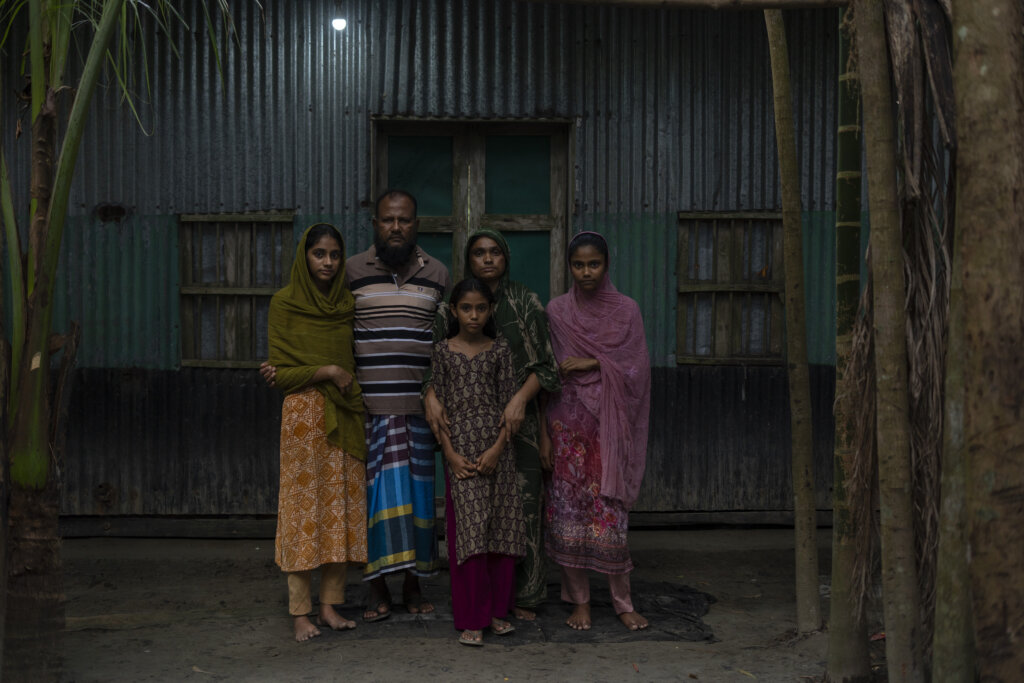
We work alongside Bangladeshi photographer and anthropologist Mosfiqur Rahman Johan to amplify his work documenting the stories of individuals in Bangladesh who were wrongfully convicted and endured the horrors of death row.
Read these important stories