
Mosfiqur Rahman Johan
Mosfiqur Rahman Johan is a Bangladeshi anthropologist and documentarian renowned for his work exploring humanitarian, socio-political and environmental issues.
The Death Penalty Project began collaborating with him in early 2025 to support his work documenting the stories of those wrongfully convicted and sentenced to death in Bangladesh.

About Mosfiqur Rahman Johan
Through narrative-driven documentation that often focuses on memory, Johan’s work portrays the complexities of socio-political dynamics and cultural identities. His work raises awareness of lesser-known stories that deserve attention, exploring themes of resistance and resilience–overlooked to challenge accepted narratives.
He blends his artistry with his background as an anthropologist, using an immersive approach where he actively engages as a participant-observer. Being in close, long-term contact with the subjects advances his layered, sensitive and sometimes contradictory storytelling on complex issues such as enforced disappearances, the death penalty, forced displacement and police brutality.
Johan’s works have been awarded, exhibited, and featured in different international media and platforms around the world.
The Death Penalty Project began working with him in early 2025 to support his documentation of recent human rights abuses and the realities of the Bangladesh’s capital punishment system, as our work in the country widened in response to its dynamic political landscape.
With hundreds of people sentenced to death every year in the country – many of whom are likely to experience torture in custody – and more than 2,600 people estimated to be on death row, our collaborative efforts with Johan and other partners continue to be vital, to raise awareness of the horrors of capital punishment and explore avenues for dialogue about criminal justice reform.
Life After Death Row
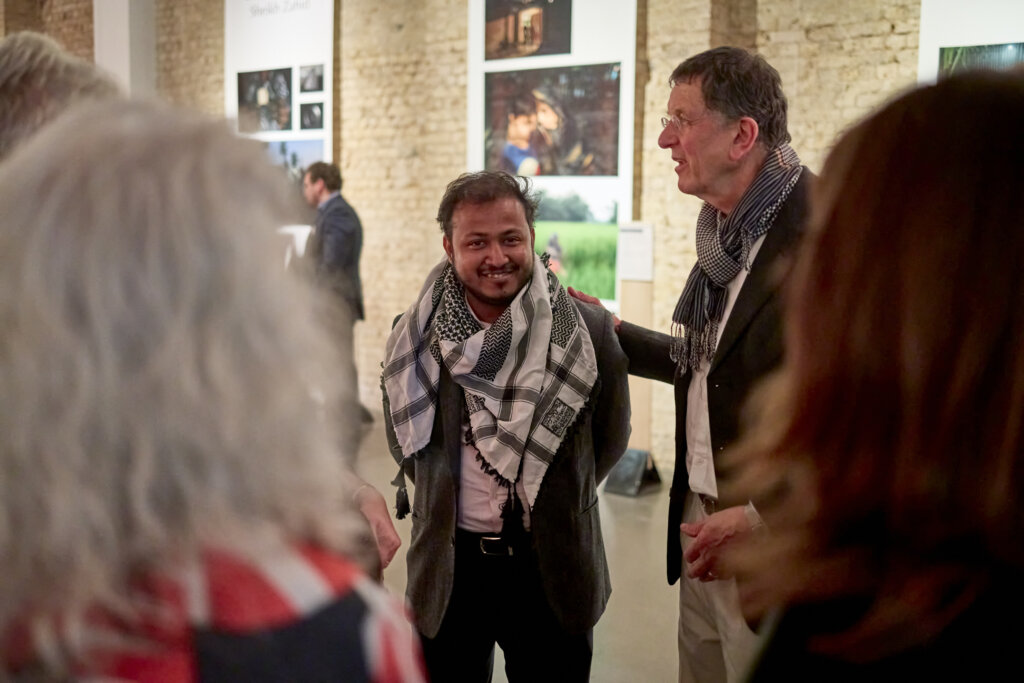
On 10 December 2025, International Human Rights Day, we were honoured to host an exhibition of Johan’s work at the prestigious Whitechapel Gallery in London.
Together, we showcased the resilience of seven individuals wrongly convicted and subjected to the horrors of death row in Bangladesh. All of them had spent years, sometimes over a decade, in deplorable conditions of solitary confinement before being acquitted and released.
Our Life After Death Row event included a panel discussion with Mosfiqur Rahman Johan, Baroness Helena Kennedy KC, sculptor Antony Gormley and our Co-Executive Director Saul Lehrfreund, where they unpacked Bangladesh’s harrowing death penalty statistics and potential paths to abolition, raised issues of coerced confessions and conditions of detention, and covered the vital role of art as a tool in human rights movements.
Speaking on his experience working with The Death Penalty Project and the exhibition, Mosfiqur Rahman Johan said,
It has been a deeply meaningful experience. Their support has also helped me continue important work on the death penalty in Bangladesh… Working with people who were innocent but still wrongfully convicted has been emotionally challenging, especially while engaging with the realities of the death penalty.

Seven stories. Thousands more.
Absorb the stories of the seven individuals included in our Whitechapel exhibition, Life After Death Row, with Mosfiqur Rahman Johan.
Find out more